CC BY-NC: This license requires that reusers give credit to the creator and for noncommercial purposes only.
Modern landscape
UNIT I - 1500 TO PRESENT
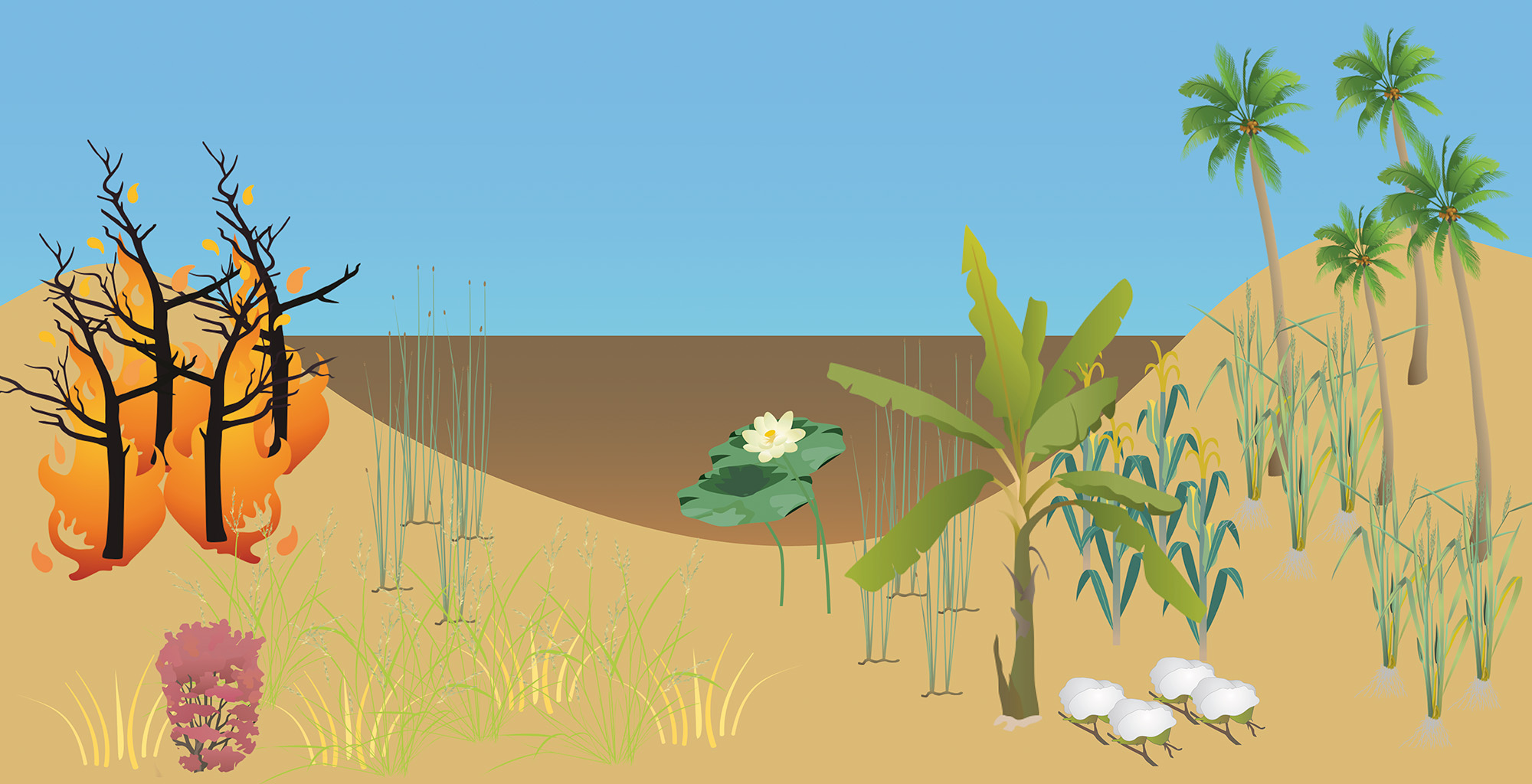
1500 years ago there was a drastic change in the environment that may have occurred due to climate change and/or the introduction and intensification of agriculture in the region by the Bantus (an African ethnolinguistic group).
The landscape becomes similar to the current one and is dominated by herbaceous and vegetation typical of swampy ecosystems that develop in depressions that exist between the dunes (herbaceous and aquatic plants: Cyperaceae, Nymphea and Typha).
Between 1500 and 1000 years ago, there is a great decrease in fires, and these become very variable from this time to the present. In this phase, the lake water becomes fresh, richer in nutrients and reductor (eutrophication of the lake with loss of biodiversity) (diatoms, gastropods and ostracods). The possible human presence in the region and the disappearance of the forest ecosystem may have led to the removal of herbivores from this area.
Forest
UNIT II - 4500 TO 1500 YEARS AGO
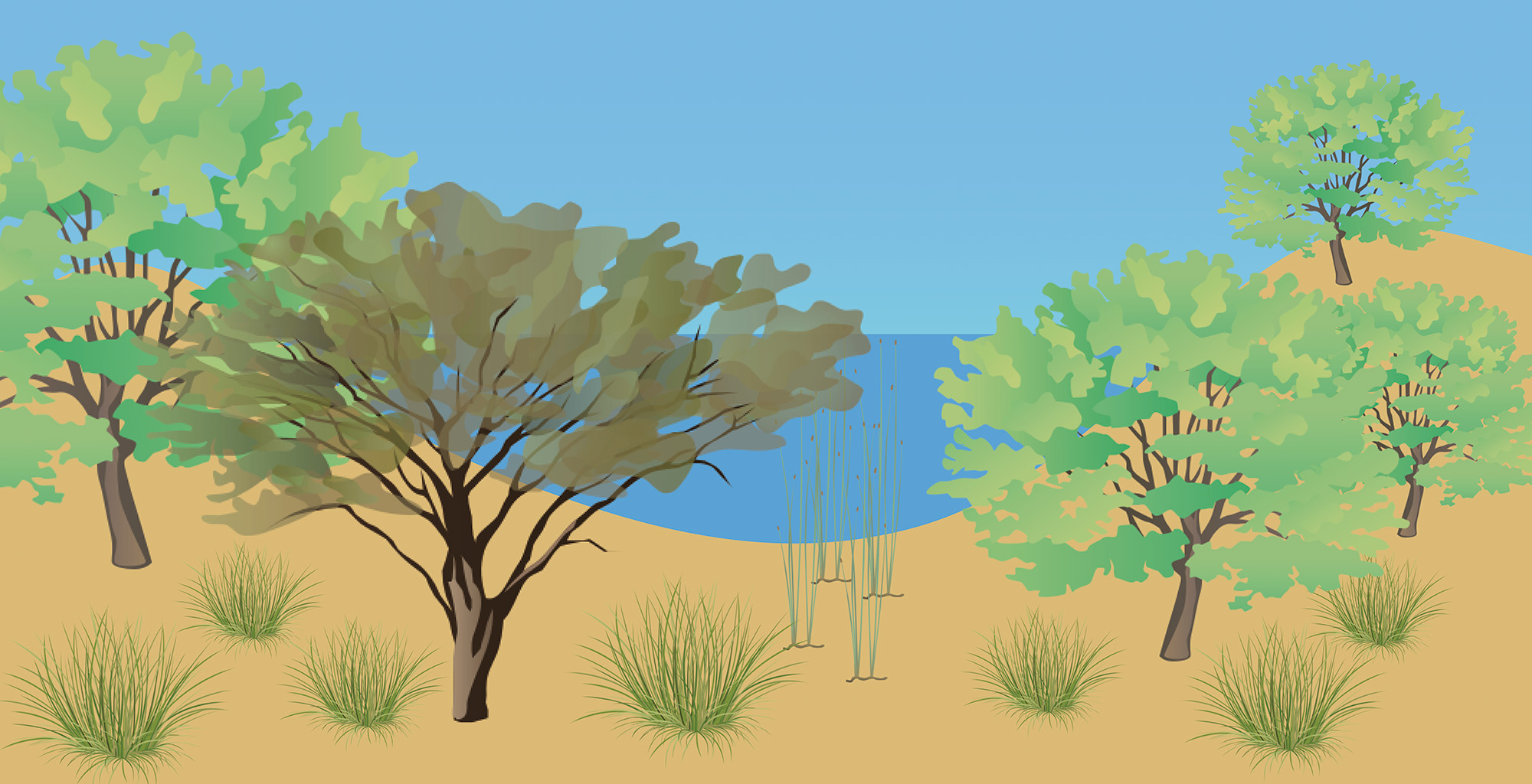
Transition to a landscape associated with a forest ecosystem, which indicates the passage to a wetter climate than the one existing in the previous phase. Herbaceous plants are still present (Poaceae - gramineous), and medium-sized deciduous trees of the genus Celtis (e.g., mulberry) become dominant in the landscape (a genus associated with temperate climates).
At lower concentrations, it is also possible to find species from the families Cyperaceae (associated with humid conditions and poor soils) and Fabaceae (whose wood is particularly good for making fire and producing coals), and of the genus Aloe (generally associated with hot climates although growing in a wide spectrum of climatic conditions). It is also worth mentioning the occurrence of some acacias.
During this phase, as would be expected, there is a decrease in the occurrence of fires in relation to the previous phase, and its fuel source also changed to woody and hardwood material available in the forest ecosystem. The lake water becomes predominantly brackish (diatoms, gastropods, ostracods and foraminifera) and the lake sedimentary record is composed of finer and richer organic matter sediments than in the previous phase.
Savana
UNIT III - 7500 TO 4500 YEARS AGO
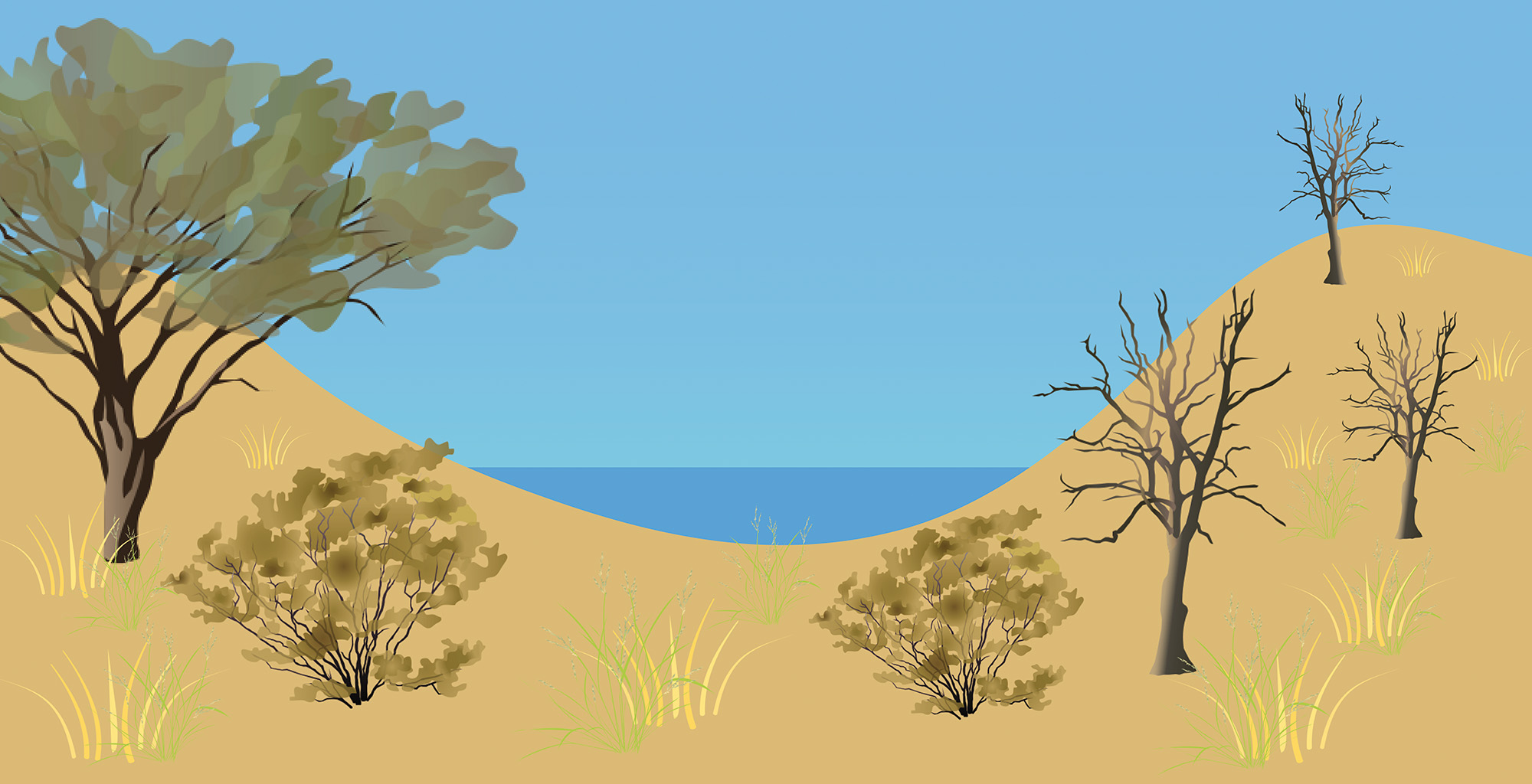
This period coincided with the Holocene climatic optimum during which the climate in Africa was generally wetter and warmer than it is today. Around the lake, the landscape is typical of a savanna ecosystem. The vegetation that covered the dunes was dominated by herbaceous plants (Poaceae - gramineous) and small patches of shrubs and some high trees (of the genus Combretum) scattered throughout the landscape. There are also some plants from the Moraceae family commonly known by the genus Ficus.
This ecosystem is often associated with climates with marked seasonality, where summers are warm and humid, and winters are mild and dry. Thus, during the summer there were few fires, but during the winter the dry herbaceous vegetation favoured the moderate occurrence of fires. The marked seasonality also causes the oscillation of the lake water salinity between fresh and saltwater, respectively in summer and winter (according to the fossil association of diatoms and gastropods).
These environmental changes are preserved in the sedimentary record, mostly composed of sandy sediments and gypsum and calcium carbonate precipitates (which present laminations due to seasonal fluctuations).
Download the InMoz game!
We present the board game "In Moz: The adventure for knowledge". Created to help the dissemination and communication of science within the scope of an international research project that studies the environmental changes that occurred over the last 7500 years on the southeastern coast of Mozambique.

 CC BY-NC: This license requires that reusers give credit to the creator and for noncommercial purposes only.